
For so long, I thought my struggle was having too much to do.
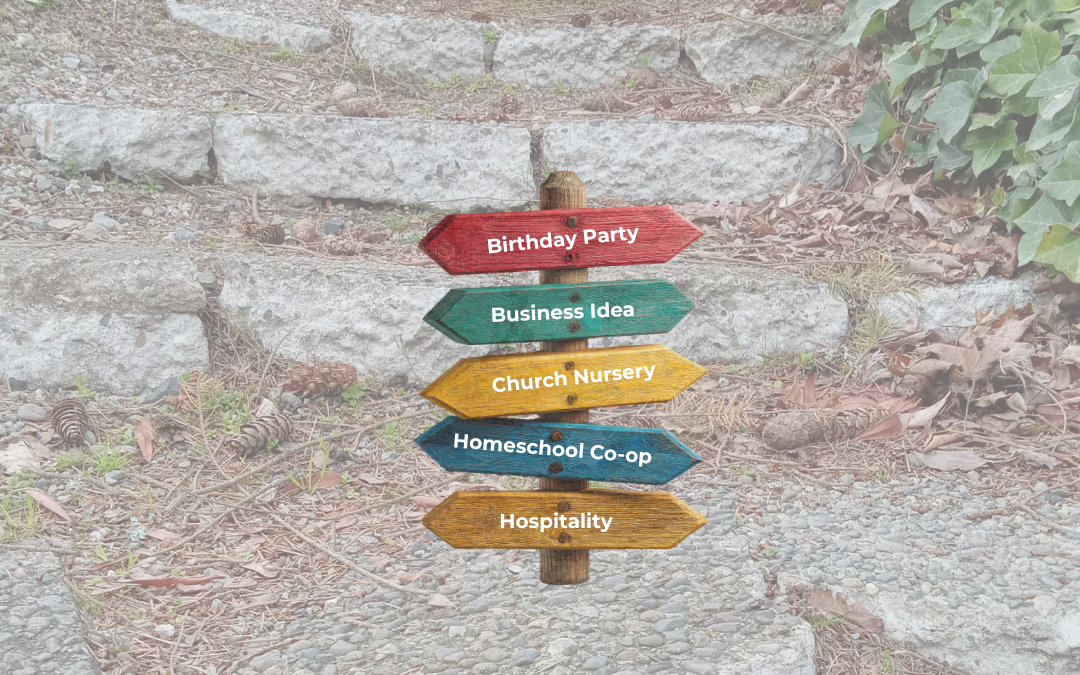
Looking back, I think the real issue was having too many good things to choose from. Bad things are often easier to identify. Good things? They’re trickier. Because every opportunity sounds worthwhile. Every request feels important. And every need seems legitimate.
Before long, I found myself exhausted—not because I was doing the wrong things, but because I was trying to do all the right things.
Things like:
- Serving at church
- Helping friends
- Volunteering at school
- Extended family commitments
- Taking another course
None of these is inherently bad. And that’s what makes discernment harder.
Somewhere along the way, I forgot that God never asked me to carry every good opportunity that was placed in front of me. He asked me to steward the assignments He actually gave me. Understanding this distinction changed everything.
1 Corinthians 10:23 (NLT) says, “You say, ‘I am allowed to do anything’—but not everything is good for you. You say, ‘I am allowed to do anything’—but not everything is beneficial.”
The author, Paul, wrote an almost identical verse in 1 Corinthians 6:12, but here he has broadened the application considerably. The discussion in the moment was eating food offered to idols, consideration for weaker believers, etc. Several verses later he brings it all home in Verse 31, “So whether you eat or drink, or whatever you do, do it all for the glory of God.”
Reading on, you’ll see Verse 33, “I, too, try to please everyone in everything I do. I don’t just do what is best for me; I do what is best for others so that many be saved.” Terri, do you see this? Yes… yes I do. However, this verse is not about people pleasing. Paul’s aim was doing what one can so that others might be saved. His goal wasn’t approval, it was others’ salvation.
A mom who says no to a third social event this week, or even a volunteer request at school or church, so she can steward her home, her sleep, her finances, and her capacity may actually be more aligned with God’s purposes in the moment than the woman who says yes to everything out of fear of disappointing others.
The question isn’t: Will everyone be happy with my choice?
The question is: What best serves God’s purposes here, in this season?
This is exactly where it got sticky in my mind. There were times when I knew the answer was a definite “no.” Sometimes, it was a generous yes. Then there were those times I wasn’t fully sure.
“Beneficial” is where things get tricky. Most good opportunities have some benefit attached to them. The challenge is that we often ignore the cost.
Benefit: “We get to see our friends or family, and it’ll be good for the kids to play with their cousins or friends.”
Cost: The kids are now overtired from a late night, which makes for a rough school morning and a tiring start for everyone.
Benefit: “No one else stepped up and the church could really use the help. It serves others and blesses God.”
Cost: Now we’re spending hours preparing 100 craft kits for a VBS that starts in 2 days; at the cost of depleting capacity for family.
Benefit: “I’ve been wanting to take this course for months. I’ll learn so much.”
Cost: The course becomes another commitment, another thing competing for attention when you’re already stretched thin.
That’s when you realize… perhaps the cost is greater than the benefit in this season, and maybe this good thing isn’t yours to carry right now.
I also learned seeing a need—or being asked to handle one—doesn’t automatically make it my assignment. Sometimes my willingness to carry the load prevented someone else from taking responsibility for something that belonged to them. Not every problem we can solve is one we are called to solve.
The opportunity wasn’t the problem. The problem was counting the benefit while ignoring the cost. Everything costs something. Time, energy, attention, capacity, sleep, margin.
It isn’t simply, “Is this beneficial,” but, “Beneficial compared to what?” Because saying yes to one good thing often means saying no to another. And sometimes the most beneficial thing we can do is say no and be faithful with what is already sitting in our hands.